The Complete Newborn Photoshoot Guide: Tips, Poses & Ideas (2026)

Welcome to the magical, fleeting world of the newborn photoshoot. Those first few weeks of your baby's life are a blur of late-night feedings, endless cuddles, and an overwhelming amount of love. Before you know it, your tiny infant will be rolling over, crawling, and taking their first wobbly steps. Capturing these early, delicate moments through a newborn photoshoot is one of the most incredible investments you can make as a new parent. The wrinkles, the tiny toes, the milk-drunk smiles—these are the details you will want to remember forever.
Whether you are pregnant and planning ahead, or you are holding your brand-new baby right now and frantically searching for ideas, this comprehensive guide will walk you through absolutely everything you need to know about planning and executing the perfect newborn photoshoot. From understanding the ideal timing and ensuring your baby's absolute safety, to choosing the best poses, selecting the right props, and even exploring modern, stress-free alternatives like AI photography, we have you covered.
Let's dive into the ultimate guide to capturing your baby's first days in stunning, timeless detail.
When to Schedule Your Newborn Photoshoot
One of the most common questions expecting parents ask is, "When is the best time to take newborn photos?" The window for that classic, sleepy, curled-up newborn aesthetic is surprisingly narrow, making timing one of the most critical elements of a successful newborn photoshoot.
The Ideal Window: 5 to 14 Days Old
For those iconic, highly-posed studio newborn pictures where the baby is molded into adorable, womb-like positions, the golden window is between 5 and 14 days after birth.
Why this specific timeframe? During the first two weeks of life, newborns sleep very deeply and spend the vast majority of their time snoozing. Their bodies are still remarkably flexible, retaining the curled-up posture they grew accustomed to inside the womb. This makes it much easier and safer for a professional photographer to gently transition them from one pose to the next without waking them up.
Furthermore, scheduling within the first two weeks often means you can capture the photos before baby acne or infant colic typically sets in, ensuring their skin looks smooth and they remain comfortable throughout the session.
What If You Miss the Window? The "Older Newborn" Session
Life with a newborn is unpredictable. If you had an unexpected NICU stay, a difficult recovery, or simply felt too overwhelmed to book a photographer in the first two weeks, do not panic. You have absolutely not missed your chance for beautiful photos.
Babies between 3 and 6 weeks old can still have wonderful newborn photoshoots, though the style may shift slightly. Older newborns tend to be more alert, meaning you might get beautiful, wide-eyed portraits and capture some of their emerging personality. While they might not tolerate the tightly curled "froggy" poses, they are perfect for wrapped setups, lifestyle photography, and intimate parent-and-baby shots.
When to Actually Book the Photographer
Do not wait until your baby is born to find a photographer! The best time to book your newborn photoshoot is during your second trimester. Because babies arrive on their own schedule, professional newborn photographers typically pencil in your due date and then ask you to contact them within 48 hours of delivery to finalize the exact date and time of the session.
Safety First: The Uncompromisable Rule of Newborn Photography
When you hand over your days-old infant to a photographer, you are placing an immense amount of trust in their hands. Safety is the single most important aspect of any newborn photoshoot. A beautiful photo is never worth risking a baby's well-being.
The Truth About "Composite" Images
Many of the most popular newborn poses you see on Pinterest and Instagram—such as the famous "froggy" pose where the baby's head is resting on their hands—are actually illusions. They are known as composite images.
A newborn baby cannot safely support the weight of their own head. For poses like this, a parent or assistant is always holding the baby's head or wrists. The photographer takes two separate images: one with the head supported from the top, and one with the wrists supported from the bottom. These images are then seamlessly stitched together in Photoshop. If a photographer attempts to balance a baby in this pose without hands-on support, it is a massive red flag.
Temperature and Environment Control
Newborns cannot regulate their own body temperature effectively. Since many newborn photoshoot setups involve the baby being naked or lightly wrapped, the studio must be kept very warm—typically between 75 and 80 degrees Fahrenheit. The photographer will often use a space heater near the baby to ensure they stay cozy, sleepy, and safe from drafts.
Recognizing Baby's Cues
An experienced newborn photographer is essentially a baby whisperer. They know how to read a newborn's cues. They monitor the baby's circulation (ensuring no limbs are turning purple from being folded too tightly), their breathing, and their comfort level. If a baby resists a pose or seems uncomfortable, a safe photographer will immediately abandon that pose and move on to something else.
Hygiene and Health
Your baby's immune system is fragile. Your photographer should have a strict illness policy, up-to-date vaccinations (including Tdap and flu), and practice excellent hand hygiene throughout the session. All props, blankets, and wraps must be thoroughly laundered and sanitized between clients.
Essential Poses for Your Newborn Photoshoot
The art of newborn posing is delicate and requires immense patience. While every baby is different and will prefer certain positions over others, here are some of the essential poses you can expect during a standard newborn photoshoot.
1. The Taco Pose (The Womb Pose)
This pose is exactly what it sounds like: the baby is folded gently in half, mimicking the tight quarters of the womb. It is an incredibly natural and comfortable pose for young newborns. It perfectly highlights their tiny facial features while showing off those adorable, squishy back rolls.
2. The Froggy Pose
As mentioned earlier in the safety section, the froggy pose is a complex composite shot. The baby's legs are folded forward, and their head rests delicately on their hands. It highlights the baby's face and flexibility, creating a striking, artistic portrait. Remember: this should always involve hands-on support at all times.
3. The Tushie Up Pose
A classic favorite, this pose features the baby lying on their tummy with their knees tucked under their belly and their bottom slightly elevated in the air. It is wonderfully sweet, showing off the natural curvature of the baby's spine and making them look incredibly peaceful.
4. Wrapped and Swaddled (The Potato Sack Pose)
Babies love being swaddled. It makes them feel secure, warm, and contained, just like they were before birth. A photographer will expertly wrap the baby in stretchy fabrics, creating a snug little package. This pose is fantastic for settling a fussy baby and offers endless opportunities to incorporate different colors and textures.
5. Macro Details
A newborn photoshoot isn't just about full-body shots. Photographers will use a macro lens to capture the microscopic, fleeting details: the flaky skin on their toes, the delicate curve of their eyelashes, the peach fuzz on their shoulders, and their tiny, perfectly formed fingernails.
6. Parent and Sibling Shots
No newborn gallery is complete without the family. Even if you feel exhausted and less-than-glamorous, getting in the frame with your new baby is crucial. These photos capture the scale of how tiny they are in your arms and document the overwhelming love and protective instincts of your new family dynamic.
Choosing Props & Accessories
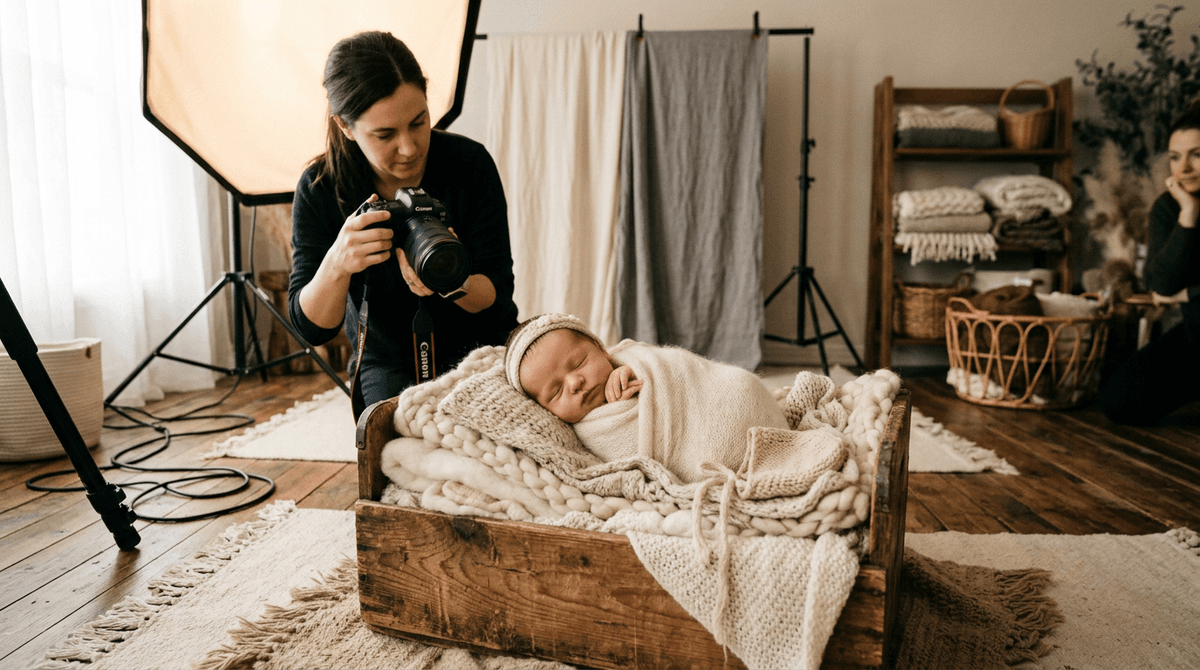
Props can add personality, scale, and artistic flair to your newborn photoshoot. However, the rule of thumb in modern newborn photography is that less is often more. The baby should always be the primary focus of the image, not the bucket they are sitting in.
Popular Props Include:
- Baskets, Bowls, and Buckets: These are classic vessels for posing curled-up babies. They provide a secure space and add rustic, vintage, or modern aesthetic elements depending on the material used (wood, wire, or woven rattan).
- Flokati Rugs: These thick, plush, woolen rugs provide incredible texture and a soft, cloud-like surface for the baby to rest on.
- Textured Wraps: Cheesecloth, soft knits, and stretchy jersey wraps are essential tools. They add color and help keep the baby warm and posed.
- Bonnets and Headbands: Tiny knit bonnets with bear ears or delicate, floral tie-back headbands add a sweet, personalized touch without overwhelming the baby's features.
- Sentimental Items: Many parents choose to incorporate a special item into the shoot, such as a grandparent's wedding ring looped around the baby's toe, a uniform (military or first responder), or a handmade quilt gifted by a loved one.
When discussing props with your photographer, think about the color palette of your home and the baby's nursery, so the final images will look beautiful when hung on your walls.
What to Wear: Wardrobe Tips for Parents
Figuring out what to wear for a newborn photoshoot can be stressful for new parents who are running on two hours of sleep. The goal is to look timeless, comfortable, and connected.
Stick to Neutral, Earthy Tones You want the focus to be on your baby and the emotional connection of your family, not on bright, distracting clothing. Soft neutrals—like cream, beige, soft gray, muted blush, or sage green—photograph beautifully and keep the visual attention exactly where it belongs.
Embrace Texture Since you are avoiding bold patterns and bright colors, you can add visual interest through texture. Think chunky knit sweaters, linen shirts, lace details, or soft waffle knits. These materials add depth and warmth to the photographs.
Comfort is Key For moms, comfort is paramount, especially if you are recovering from a c-section or a difficult birth. Flowy maxi dresses, comfortable wrap dresses, or relaxed-fit linen pants are excellent choices. They are flattering, allow for easy movement, and look beautiful on camera.
Coordinate, Don't Match Gone are the days of everyone wearing identical white shirts and blue jeans. Instead, choose a color palette of 3-4 complementary colors and mix and match. If mom is wearing a cream dress, dad might wear a soft gray henley, and an older sibling might wear a muted sage romper.
Avoid Logos and Busy Patterns Graphic tees, heavy logos, and tiny, repetitive patterns (which can cause a distracting optical illusion on camera called moiré) should be completely avoided. Keep it simple and classic.
DIY vs Professional Newborn Photography
As you prepare for your baby's arrival, you might find yourself weighing the pros and cons of hiring a professional versus taking the photos yourself.
The DIY Approach
With the quality of modern smartphone cameras, taking beautiful photos of your baby at home is entirely possible.
- Pros: It's completely free, you can take photos every single day on your own schedule, and there is zero pressure to pack up a newborn and leave the house. You can capture authentic, unposed lifestyle moments perfectly.
- Cons: You will likely miss out on the highly stylized, intricate poses that require professional training and specialized props. Lighting in a typical home can be challenging, and you will have to handle all the editing yourself. Most importantly, it's very hard for you to be in the photos if you are the one holding the camera.
The Professional Approach
Hiring a professional newborn photographer is an investment in heirloom-quality art.
- Pros: Professionals have access to high-end lighting, thousands of dollars in props, and professional-grade editing software. They are trained in newborn safety and posing techniques that are dangerous to attempt at home. You get to sit back, relax on a studio sofa, and let an expert handle everything.
- Cons: It can be expensive, and it requires you to commit to a specific date and time, which can be daunting in those early, chaotic days of parenthood.
Tip: If you decide to go the professional route, be sure to check out our directory of top-rated local photography studios in your area to find a verified, safe, and talented expert near you.
The Ultimate Stress-Free Alternative: BabyGenic AI
What if you missed the magical two-week window? What if your baby has severe colic and refuses to sleep for a photographer? What if traditional professional newborn photography is simply outside of your budget?
Enter the future of memory-making: BabyGenic AI.
At BabyGenic AI, we believe every parent deserves breathtaking, professional-quality newborn photos, regardless of their circumstances. With our advanced AI technology, you don't need to leave your house, worry about scheduling, or stress over a fussy baby.
How it works:
- Take a few simple, well-lit photos of your baby using your smartphone (even if they are a few months old!).
- Upload the photos to our secure BabyGenic platform.
- Select from dozens of stunning, studio-quality themes, props, and lighting styles.
- Within minutes, our AI generates hyper-realistic, beautifully edited newborn portraits that look exactly like they were taken by a high-end luxury photographer.
Ready to see the magic for yourself? Create your baby's perfect newborn photoshoot with BabyGenic AI today!
BabyGenic AI is perfect for parents of NICU graduates who couldn't have a traditional session, families on a tight budget, or those who simply prefer the ultimate convenience of creating magical photos from the comfort of their couch.
Cost Breakdown: How Much Does a Newborn Photoshoot Cost?
If you are planning to hire a traditional photographer, it is important to understand the associated costs. Newborn photography is often one of the most expensive types of portrait photography, and for good reason. A typical session takes 2 to 4 hours, requires massive heating, a huge inventory of props, specialized safety training, and hours of meticulous post-processing to perfect the baby's skin.
Here is a general breakdown of what you can expect to pay:
- Budget/Beginner ($150 - $300): Often newer photographers who are building their portfolio. They may have limited props and you may receive all the digital files, but the editing might not be as refined.
- Mid-Range ($400 - $800): Established local photographers with a dedicated studio space, a good variety of props, and solid safety training. Packages usually include the session fee and a set number of retouched digital images.
- Luxury/High-End ($1,000 - $3,000+): Highly sought-after, award-winning photographers. These experiences often include professional hair and makeup for mom, access to an exclusive client wardrobe, and heavily focus on creating custom, heirloom-quality printed artwork, albums, and wall canvases.
If these prices cause you to experience sticker shock, remember that you still have options!
Get luxury studio-quality results for a fraction of the cost. Transform your everyday snapshots into professional portraits with BabyGenic AI.
Frequently Asked Questions (FAQ)
1. How long does a typical newborn photoshoot take? Expect a professional newborn session to last anywhere from 2 to 4 hours. This allows plenty of time for feeding, soothing, diaper changes, and slowly transitioning the baby into different poses without rushing them.
2. What if my baby cries or won't sleep during the session? Professional photographers expect this! They are incredibly patient and have an arsenal of tricks (white noise, pacifiers, specific rocking techniques) to soothe your baby. If the baby simply will not sleep, photographers can beautifully capture alert, wide-eyed photos, or wrap the baby snugly to calm them down.
3. Should I try to keep my baby awake before the session? Most photographers recommend trying to keep your baby awake for about an hour before you arrive at the studio, and feeding them right before the session begins. A full, tired baby is much more likely to fall into the deep sleep required for those curly poses.
4. What happens if my baby poops or pees on the props? It happens at almost every single session! Photographers fully expect it. All blankets, wraps, and props are washed and sanitized after every use. Do not feel embarrassed; it is just part of the job.
5. Can we include our family dog in the newborn photoshoot? This depends entirely on the specific photographer's studio policies and safety rules. Some welcome well-behaved pets for a few quick shots at the beginning or end of the session, while others maintain a strict no-pet policy for hygiene and allergy reasons. Always ask ahead of time!
6. Do I need to bring my own props or outfits for the baby? Generally, no. Professional newborn photographers have a curated collection of wraps, bonnets, headbands, and props that fit perfectly and photograph beautifully. However, if you have a special heirloom item (like a blanket knitted by a grandmother), let the photographer know in advance so they can incorporate it safely.
Capturing the first days of your baby's life is a beautiful experience that yields memories you will cherish for decades. Whether you choose to invest in a luxury studio session, take sweet lifestyle photos in your living room, or utilize the incredible, stress-free technology of BabyGenic AI, the most important thing is that you document this miraculous, fleeting time.
Congratulations on your new arrival, and happy photo planning!